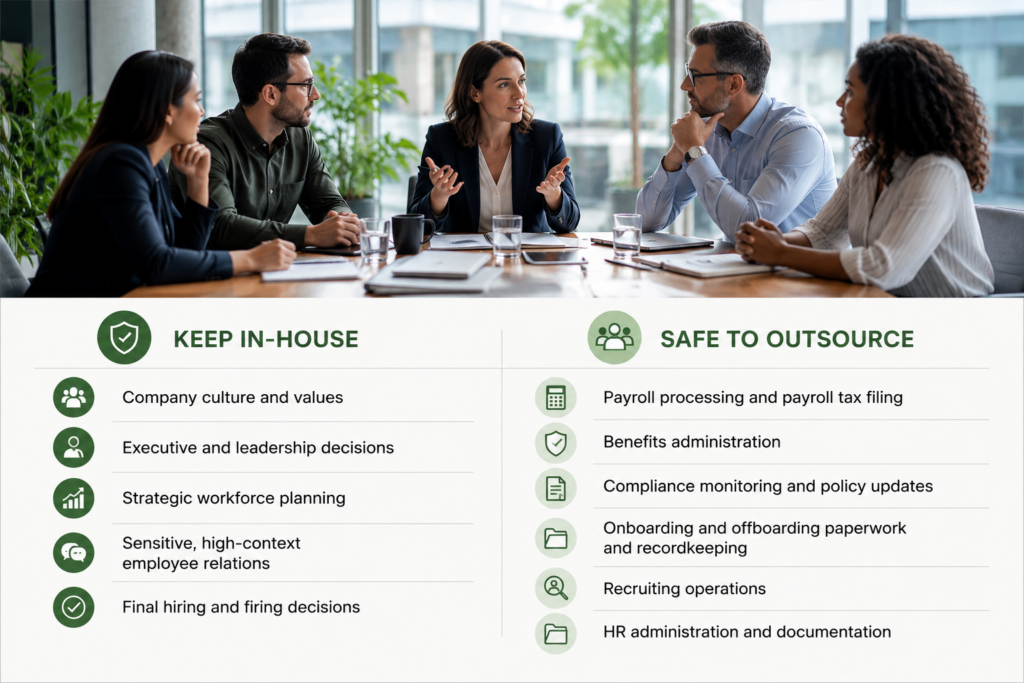
What HR functions should not be outsourced? You should never fully outsource the HR functions that define your culture and carry the highest legal and human stakes: final hiring and firing decisions, company culture and values, strategic workforce planning, executive and leadership decisions, and the handling of sensitive employee relations. Operational HR such as payroll, benefits administration, compliance monitoring, and HR paperwork is safe and smart to outsource. The best model keeps judgment in-house and hands the workload to a partner.
Outsourcing HR is one of the highest-leverage moves a growing company can make. But “outsource HR” does not mean “hand over every people decision to a vendor.” Some functions carry too much cultural weight, legal risk, or need for context to sit outside your walls. Knowing which to keep is what separates a smart outsourcing strategy from a costly one.
Here is the line we draw for the businesses we work with.
What HR functions should not be outsourced?
1. Company culture and values
Culture is not a deliverable you can buy. The tone leaders set, how wins are celebrated, and how conflict is handled all have to come from inside. An outside partner can support and reinforce culture, but it cannot define it for you.
2. Executive and leadership decisions
Leadership compensation philosophy, succession, and how you develop your most senior people are board-and-owner questions. They are too specific to your business and too sensitive to delegate outside it.
3. Strategic workforce planning
How you will grow, which roles you will add, and how you structure teams for the next stage all depend on where you want the business to go. These decisions belong to leadership. A partner can bring market data and structure to the conversation, but the strategy is yours.
4. Sensitive, high-context employee relations
When a situation involves a specific personality, a long history, or a delicate interpersonal dynamic, the person handling it needs to know the people. A partner can advise on process and keep you compliant, but the relationship and judgment should stay with someone inside the company.
5. Final hiring and firing decisions
A partner can source candidates, run the process, and make sure a termination is documented and legally sound. But the decision to hire or let someone go should stay with the leaders who own the results and the relationships. These moments shape trust across the whole team, and they carry real legal exposure when handled without context.
HR functions that are safe, and smart, to outsource
Everything operational is fair game, and handing it off frees your leaders to focus on the five areas above:
- Payroll processing and payroll tax filing.
- Benefits administration, including enrollment, carrier coordination, and employee questions.
- Compliance monitoring, tracking changing federal, state, and local rules and updating your policies.
- Onboarding and offboarding paperwork and recordkeeping, including offer letters, I-9s, and exits.
- Recruiting operations, including sourcing, scheduling, and applicant tracking.
- HR administration, including PTO tracking, handbook drafting, and documentation.
For a full breakdown of what can move off your plate, see our guide to human resources outsourcing services.
The best model: co-managed HR
The sharpest way to think about it is judgment versus workload. Keep the judgment, meaning culture, strategy, and the final people calls. Hand off the workload, meaning the processing, the compliance tracking, and the paperwork. That hybrid is called co-managed HR, and it is how most successful mid-sized companies run.
It is also how Kona HR is built to work. We carry the operational load and keep you compliant, while your leaders keep control of the decisions that define your company.
Frequently Asked Questions
What HR functions should not be outsourced?
Final hiring and firing decisions, company culture and values, strategic workforce planning, executive and leadership decisions, and sensitive high-context employee relations should stay in-house. These carry the highest cultural weight and legal stakes and depend on knowing your people and your business.
What HR functions can be outsourced?
Payroll, benefits administration, compliance monitoring, onboarding and offboarding paperwork, recruiting operations, and general HR administration are all commonly and safely outsourced. Handing these off frees leadership to focus on strategy and culture.
What is co-managed HR?
Co-managed HR is a hybrid model where an outside partner handles the operational workload, including payroll, benefits, compliance, and paperwork, while your leadership keeps the judgment-based decisions like culture, strategy, and final people calls. It is the most common arrangement for mid-sized employers.
Is it risky to outsource HR?
It is risky only if you outsource the wrong things. Handing off operational tasks to a qualified partner lowers risk by improving compliance. Problems arise when companies try to outsource judgment-based decisions like culture, strategy, and sensitive people calls that require internal context.
Want the workload gone without losing control?
Kona HR runs your operational HR, including payroll, benefits, and compliance, while your leadership keeps the decisions that define your company. Talk to us about a co-managed HR plan built around your team.